Prefabricated construction and modular construction are distinct concepts, although they are often mistakenly used interchangeably.
Prefabricated construction refers to the process in which structural elements and components of a building are manufactured in a factory and subsequently transported and assembled on-site, in a manner similar to conventional construction. For example, the new B&B Hotel in Guimarães adopts this construction process, employing prefabricated elements that are assembled on-site, along with a significant portion of work carried out in situ.
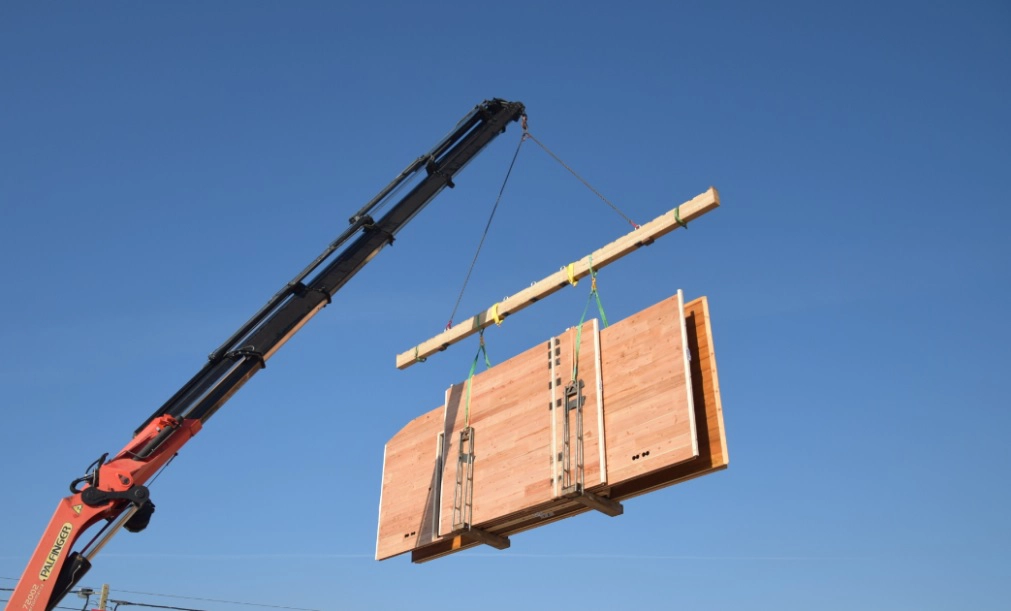
In contrast, modular construction, as defined by the Modular Building Institute, involves the off-site manufacture of a complete building in a controlled environment, such as a factory or a yard. This construction method encompasses all stages of production, from design to final delivery on-site. Modules are designed to be standardised and can be adapted to various architectural and functional solutions. In this article, we specifically address modular construction in which buildings are fully produced in a factory setting, even if additional elements are added either on-site or during the assembly process.
Put simply, modular construction allows the same module to be replicated multiple times, adapting it to the specific requirements of each project. The modules are then transported and connected to each other, much like Lego pieces, enabling faster completion of the building with controlled costs. However, it is necessary to consider the dimensional limitations of the modules, as they must be compatible with transport, which can be seen as a disadvantage of this construction approach.
Despite the aforementioned limitations, modular construction presents several advantages. From an environmental perspective, regardless of the materials used, it reduces waste since factory production allows for the optimisation of material quantities. Furthermore, there is the possibility of total or partial reuse of the modules, as in the case of relocatable buildings. Another benefit is the reduced impact of weather constraints, as production in a controlled environment minimises delays caused by adverse weather conditions. Additionally, the delivery of finished modules, including infrastructure and finishes, enables optimisation of the production process across various trades, resulting in significant time savings throughout all project phases.
Moreover, modular construction offers a safer approach compared to conventional construction, as it reduces certain risks associated with in situ execution. It is also worth highlighting that the advancement and future of digital tools — such as computer-aided design and automated cutting — are further driving the industrialisation of modular construction, streamlining processes from design to the on-site delivery of modules.
In summary, modular construction offers a wide range of applications and is particularly well suited to buildings with a high degree of repeatability. Nowadays, there is also growing interest in the use of timber as a construction material, due to its environmental advantages, such as being a natural, renewable, recyclable, and locally available resource. In this context, the incorporation of timber in modular construction is an emerging area and one that merits detailed analysis.
Modular Construction Systems
The systems used in modular construction can be categorised into two types: those that use flat two-dimensional (2D) elements and those based on three-dimensional (3D) volumetric modules. The choice of the most appropriate construction method depends on the specific project.
The 2D system is characterised by the use of panels, allowing for more flexible architecture and simpler logistics. On the other hand, the 3D system, which involves the use of volumetric modules, enables production along an assembly line, with sequential, repetitive, and well-defined tasks carried out in a factory setting, which allows for the optimisation of construction costs.
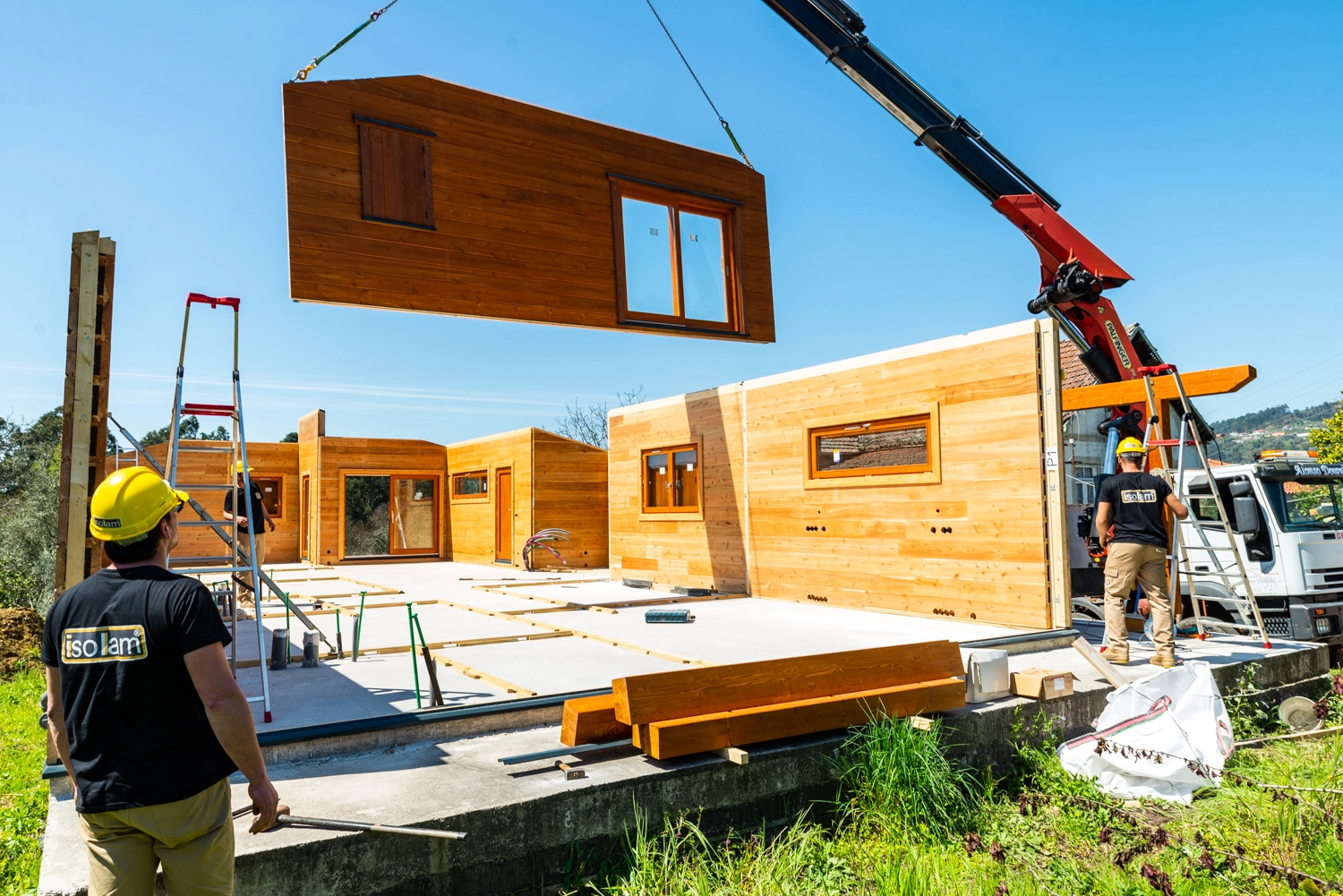
In 2D modular construction, the panels are transported to the construction site and then assembled together. These panels may already contain installed infrastructure, and in some cases, finishes are also completed. The 3D modules likewise need to be assembled on-site; however, they cover a much larger area, have infrastructure already installed, and generally, a large portion of the finishes and cladding are already complete.
It is important to note that 2D construction, with panels that can even be joined together within the factory, can give rise to 3D volumetric modules. Additionally, there are hybrid systems that combine 3D modules with 2D panels, aiming to optimise productivity. In such cases, 3D modules are typically used in areas more susceptible to humidity, such as bathrooms, while the flexibility inherent in 2D panels is exploited in the remaining areas of the building.
Studies indicate that, when compared to traditional construction, the 2D panel-based system enables cost reductions of approximately 17%, whereas this reduction increases to 20% with the hybrid system, and up to 24% when using 3D modules.
2D Panels
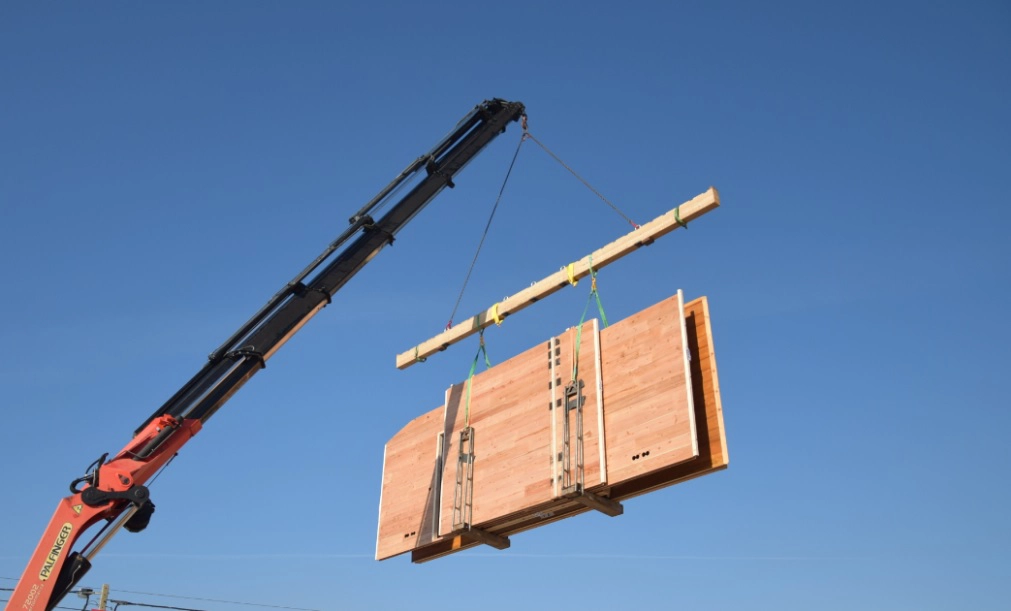
2D panels are manufactured in an industrial environment and subsequently transported to the construction site, involving relatively simple logistics when compared to the transport of 3D modules. Due to the flexibility they offer, this system is particularly recommended for buildings with distinct architectural elements, such as detached houses.
In Portugal, construction using timber 2D panels is widely adopted.
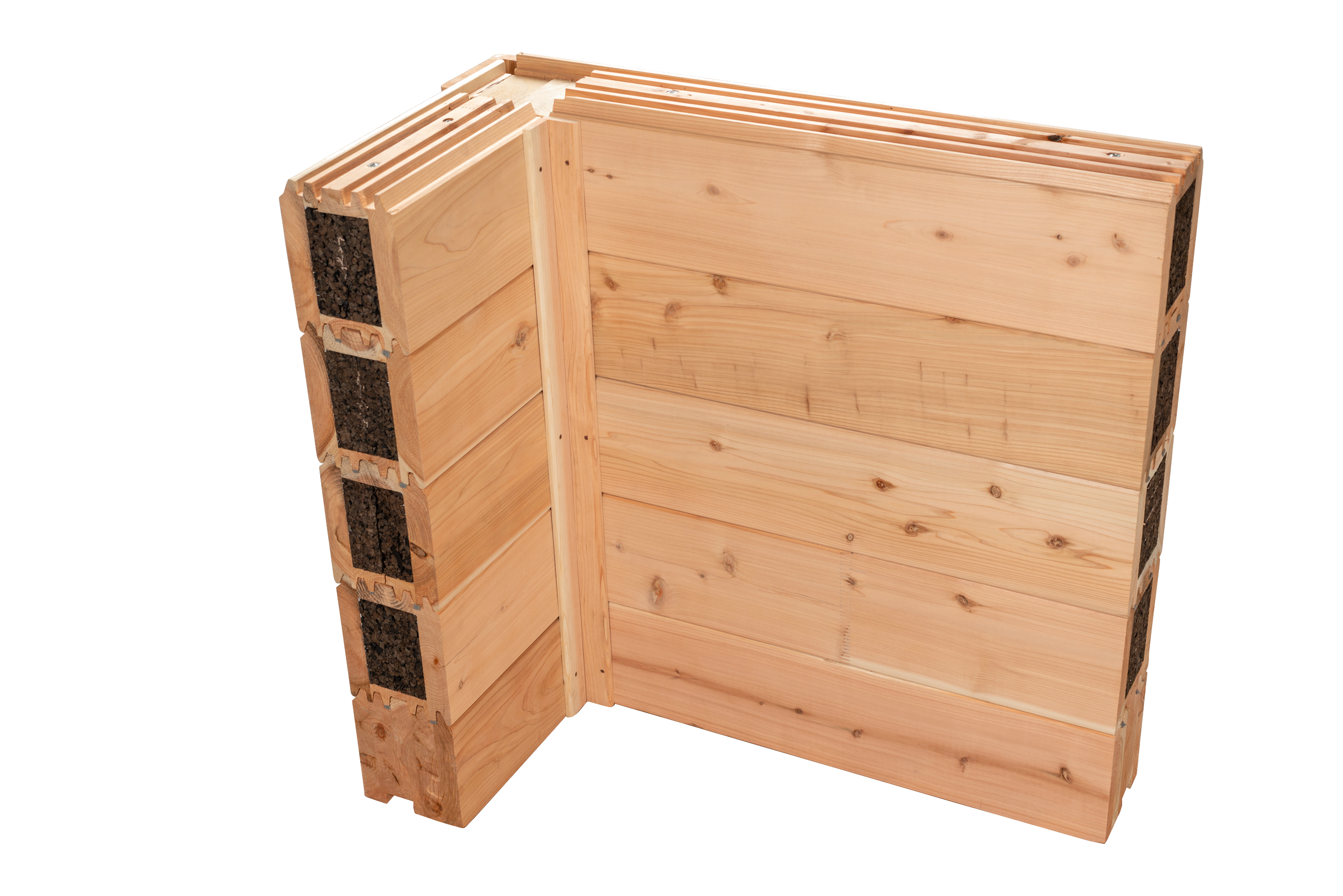
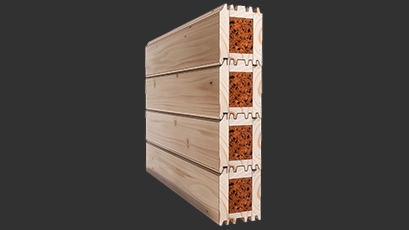
One example is the ITS™ (Insulated Timber System), developed by rusticasa®. This system uses structural panels composed of hollow glued-section elements, which are internally filled with cork. This approach aims to improve the thermal performance of the panels.
The system incorporates cork as a thermal insulation material within the structural panels. The use of hollow and glued-section elements provides structural strength and stability, while the cork filling contributes significantly to the system’s energy efficiency. Cork is a natural material with excellent insulating properties, offering effective thermal insulation and environmentally sustainable characteristics. This combination of structural elements and cork insulation results in a construction system that promotes thermal comfort and reduces energy consumption.
The ITS™ system represents a viable and environmentally conscious option for modular construction, offering a solution that prioritises both thermal performance and sustainability. By using cork as an insulating material, the system showcases the potential for employing renewable natural resources in construction, contributing to the reduction of environmental impact and the improvement of energy efficiency in buildings.
Source TechMinho © 2023