News

The resistance of wooden houses to adverse weather conditions: an integrated technical approach

A resistência das casas de madeira face às inclemências do tempo - uma abordagem técnica integrada.webp
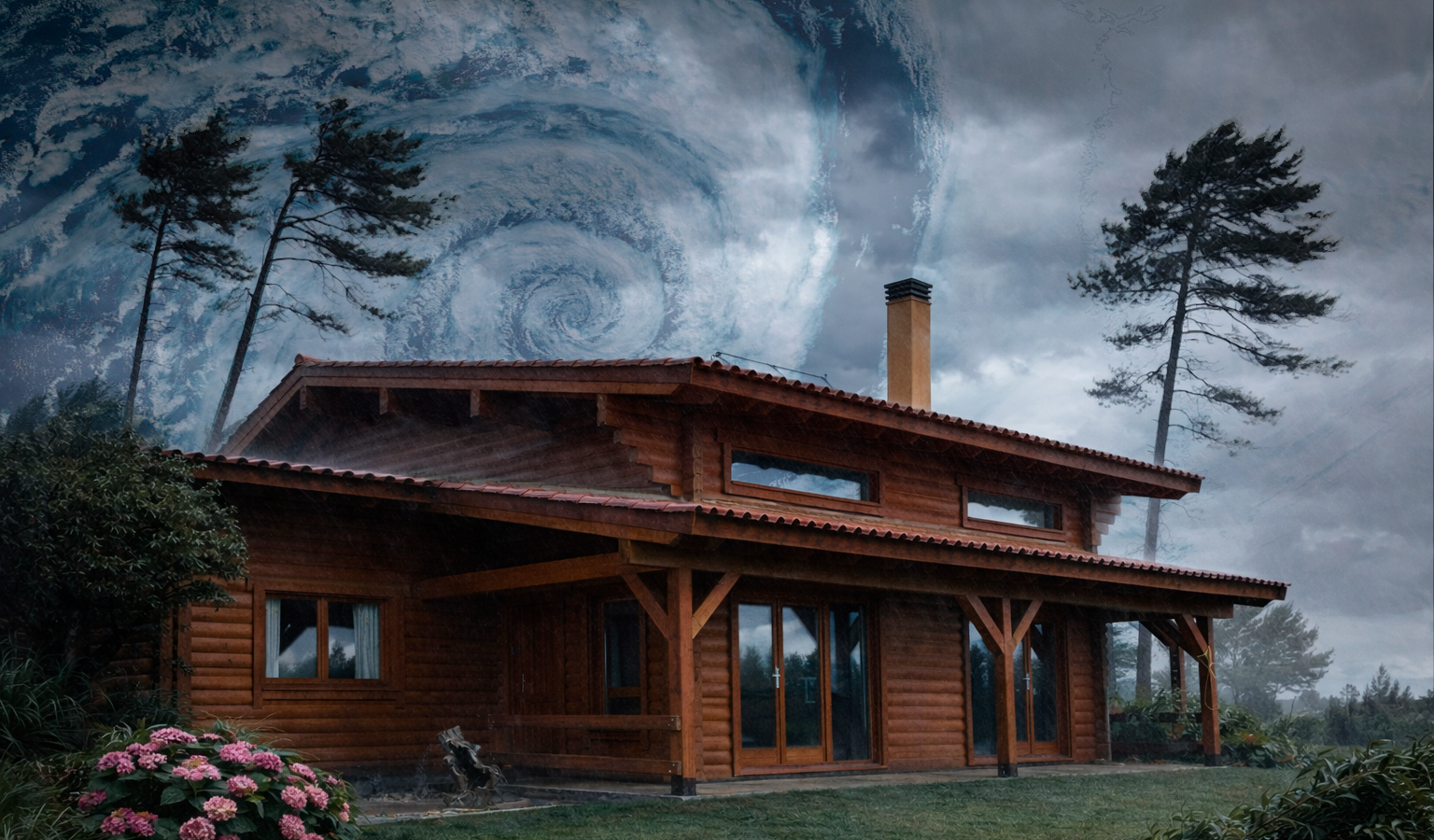
Wood is one of the oldest construction materials used by humankind and, simultaneously, one of the most contemporary within the context of sustainable and technically advanced construction. Its durability, often questioned in a simplistic manner, is now widely demonstrated by scientific studies, technical standards, and historical examples of century-old buildings still in full operation.

However, the resistance of wooden houses to adverse weather conditions does not depend exclusively on the natural properties of the material. It results from the rigorous integration of three fundamental paradigms: design conception, structural mechanical performance, and wood preservation. It is the coherent articulation of these three factors that objectively defines the durability of the construction over time.

1. Design conception: the first line of defense against climate

Design conception constitutes the most decisive level in protecting wood against atmospheric agents. Before selecting the species, treatment, or construction system, it is the architectural and constructive design that determines the degree of wood exposure to water, solar radiation, wind, and thermal variations.

From a technical standpoint, the fundamental principle is clear: wood must remain dry for as long as possible. Degradation does not occur due to the occasional presence of water, but rather because of persistent moisture associated with oxygen and temperatures favorable to biological development.

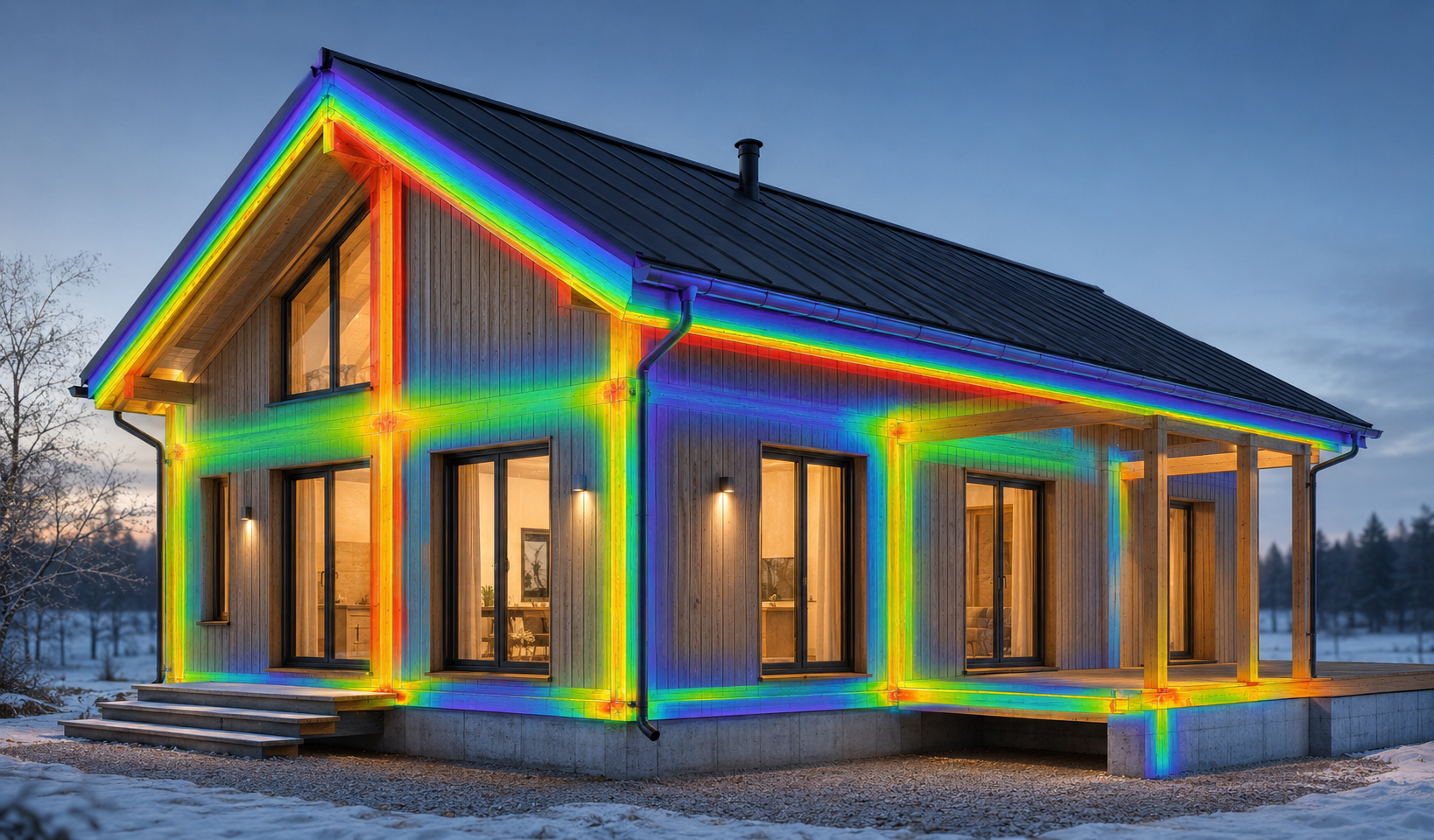
Solutions such as extended eaves, covered balconies, recessed façades, and elevated plinths significantly reduce the direct impact of rain and prevent moisture absorption by capillarity from the ground. These strategies, inherited from vernacular architecture, have widely proven technical effectiveness.

Ventilation of wooden surfaces, particularly in façades, is another essential element. Ventilated façade systems allow rapid drying after rainfall events, reducing the average moisture content of the material over time and preventing zones of stagnant humid air.

Building orientation and the analysis of solar exposure and prevailing winds also contribute to a balance between protection and natural drying. Permanently shaded and poorly ventilated façades present a higher risk of premature degradation.

2. Mechanical performance: structural response to environmental loads

The second paradigm of durability in wooden houses is the structural mechanical performance, evaluated based on normative criteria and laboratory testing. Wood presents an excellent strength-to-weight ratio and highly efficient structural behavior when properly dimensioned.

This performance involves properties such as compressive, bending, tensile, and shear strength, as well as stiffness and dimensional stability. These parameters depend on the species, strength class, moisture content, and the adopted construction system.

Standardized testing validates not only structural elements but also complete construction systems, including panels, beams, and, in a particularly critical manner, mechanical connections. Connections are often the most stressed points under wind loads, dynamic actions, and seismic forces.

Moisture variations cause natural hygroscopic movements in wood. If these movements are not properly accounted for in structural design, cracks, deformations, and gaps may develop, facilitating water ingress and accelerating degradation.

The use of kiln-dried and stabilized timber is essential to ensure dimensional predictability and reduce long-term creep and deformation. Quality control of structural material is therefore a direct factor in durability against climatic adversity.

3. Wood preservation: active and passive protection over time

Even with well-conceived design and mechanically efficient structure, wood, as an organic material, requires appropriate preservation strategies. Preservation aims to increase wood resistance to biological, physical, and chemical agents throughout its service life.

The first decision concerns the selection of wood species, considering its natural durability. Some species present high intrinsic resistance to fungi and wood-boring insects, making them particularly suitable for exterior applications or exposed areas.

When less durable species are used or when exposure conditions are more severe, preservative treatments are applied, such as pressure treatment in an autoclave or thermal modification. These processes significantly increase biological resistance and reduce the hygroscopicity of the material.

Additionally, surface finishes, such as oils, stains, or varnishes, are applied as partial barriers against water and ultraviolet radiation. These products delay the surface aging of wood, although they do not replace sound constructive design.

Effective preservation also includes scheduled maintenance, with periodic inspections and reapplication of finishes, preventing the progression of pathologies and ensuring long-term performance.

Conclusion: durability as the result of integrating the three paradigms

The resistance of wooden houses to adverse weather conditions results from the coherent integration of design conception, mechanical performance, and wood preservation. None of these factors alone guarantees durability.

An inadequate design cannot be compensated for by sophisticated treatments; a robust structure loses effectiveness if permanently exposed to moisture; and even the best timber fails if not properly protected and maintained.

When these three paradigms are considered in an integrated manner from the design phase through execution and maintenance, wooden houses demonstrate high durability, successfully withstanding adverse weather conditions over several decades.

Related articles

Best of Wine Tourism Award 2018

The exclusive Casa do Rio Hotel, built in 2014 by rusticasa® on a project by architect Francisco Vieira de Campos, was awarded the prestigious Best of Wine Tourism Award 2018 in the...

Read more

rusticasa® awarded INOVADORA '23 status

rusticasa® is honoured to announce that it has been awarded INOVADORA’23 status, an important recognition for companies that stand out for their innovation capacity and contribution to...

Read more

Construir '18 awards

Casa do Rio was once again distinguished with the Construir’18 Award, in the category of Best Private Project. CONSTRUIR magazine, in a clear sign of commitment, perseverance and...

Read more