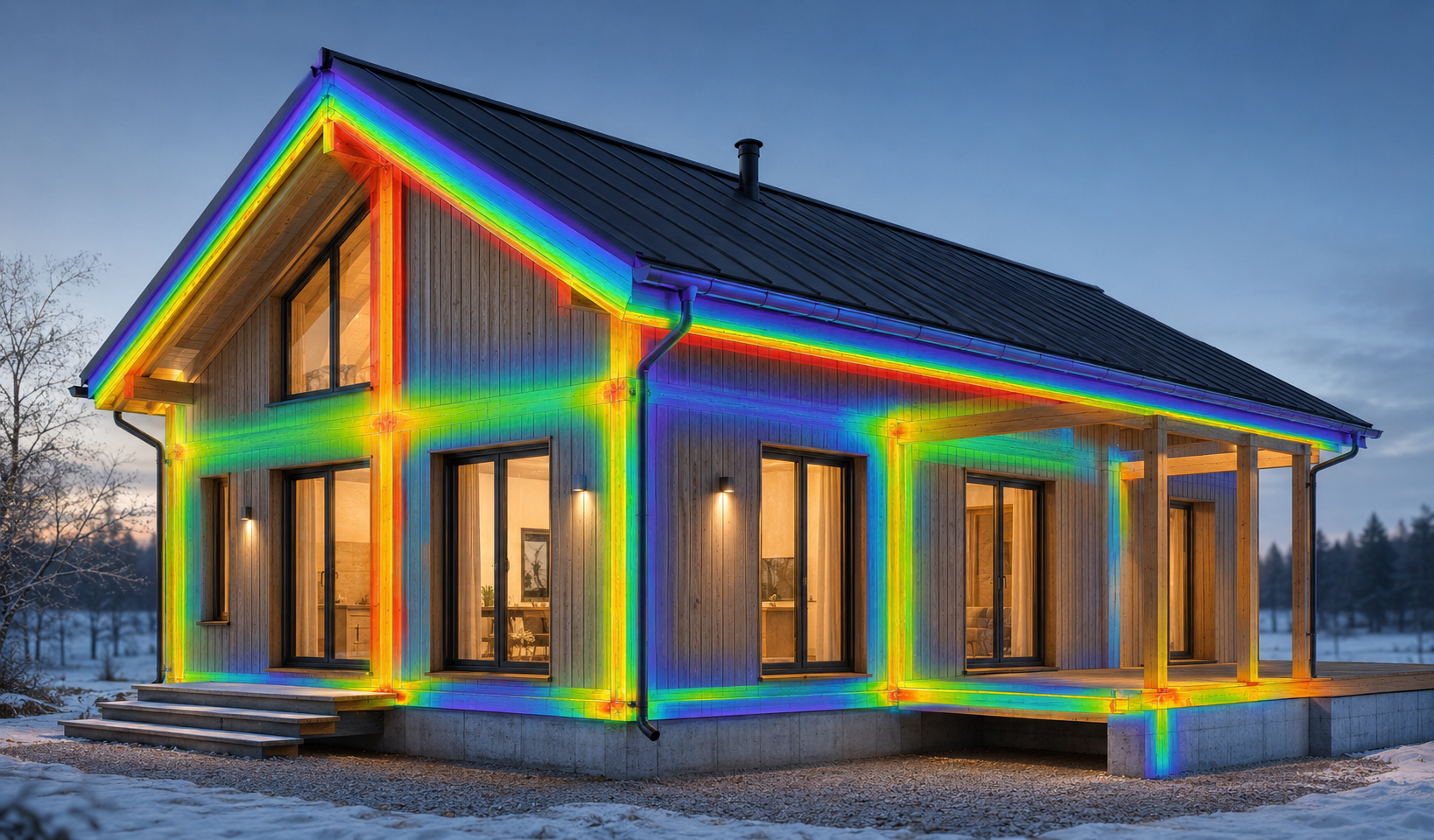
Thermal Insulation Coefficient in Timber Houses: European Standards and Performance of rusticasa® Systems
The thermal performance of buildings is a key criterion for occupant comfort and construction energy efficiency. In the case of timber constructions, this performance largely depends on the characteristics of the adopted construction systems. rusticasa®, as a manufacturer of industrialised timber construction solutions, offers certified systems with high thermal resistance, in compliance with current European regulatory requirements.
1. Fundamental Concepts of Thermal Performance
1.1 Thermal resistance (R)
Thermal resistance (R) is a physical quantity that expresses the ability of a material or construction element to resist heat transfer by conduction. It is expressed in square metres kelvin per watt (m²·K/W) and is calculated using the formula:
R =
d
λ
where:
- d: thickness of the material (in metres);
- λ: thermal conductivity (in W/m·K).
The higher the R-value, the greater the thermal insulation capacity of the system.
1.2 Thermal transmittance (U)
Thermal transmittance (U) expresses the amount of heat that passes through a building element per unit area and per degree of temperature difference between its faces (W/m²·K). It is related to the total thermal resistance of the system and is its reciprocal:
U =
1
Rtotal
This parameter is essential for assessing the thermal performance of walls, roofs, and floors, and is the main regulatory indicator used in energy certificates.
1.3 Thermal inertia
Thermal inertia refers to the ability of a construction system to store heat and delay temperature fluctuations. It depends on the thermal mass of the materials, that is, their density and specific heat capacity. Materials with high thermal inertia help smooth out thermal peaks and maintain a more stable indoor temperature throughout the day.
While thermal resistance and transmittance are associated with the amount of heat transferred, thermal inertia relates to the rate of that transfer and the long-term thermal stability.
2. Thermal Performance of rusticasa® Construction Systems
Based on tests presented in the European Technical Assessment (ETA) documents, the following thermal resistance values were obtained:
| System |
R (m²·K/W) |
|
| HTS (Hybrid Timber System) |
3,67 |
|
| ITS (Insulated Timber System) |
3,03 |
|
| TFS (Timber Frame System) |
4,41 |
|
| LTS (Laminated Timber System) |
2,57 |
2.1 ITS – Insulated Timber System
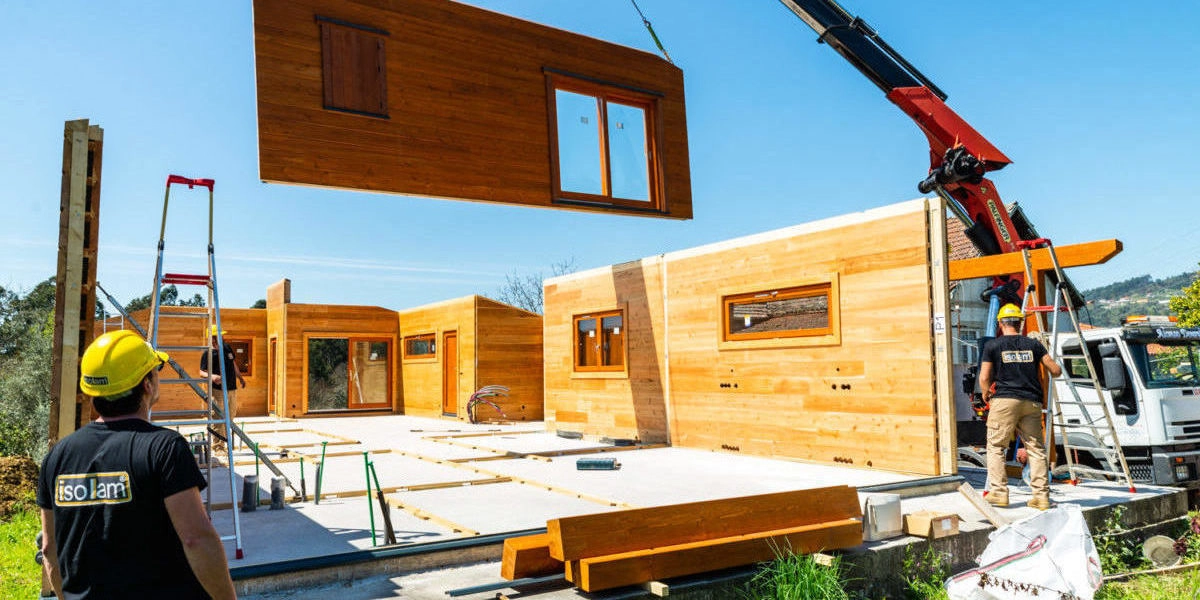
Composed of self-supporting panels made of laminated timber with an expanded cork core. It combines structure and insulation in a lightweight solution, without thermal bridges and with fast assembly.
2.2 HTS – Hybrid Timber System
Hybrid structure in solid wood with continuous insulation and ventilated façade. Robust, durable, and with high thermal performance.
2.3 TFS – Timber Frame System
Light frame with insulation filling between studs and wood-based panels. High thermal insulation and architectural flexibility.
2.4 LTS – Laminated Timber System
System of glued laminated logs with structural function and natural insulation. Emphasises thermal mass and rustic aesthetics.
3. Technical Comparative Analysis
TFS and
HTS systems offer the best thermal performance, with
R-values above 3.5 m²·K/W, resulting in U-values below 0.30 W/m²·K. The
ITS system provides a balanced solution between performance and constructive simplicity. Although the
LTS system has a lower thermal resistance, it benefits from high
thermal inertia, contributing to passive thermal comfort.
4. Conclusion
rusticasa®'s construction systems demonstrate high thermal performance, complying with European standards and national regulations. They are suitable solutions for nearly Zero Energy Buildings (nZEB), combining comfort, efficiency, and sustainability.
References
- Portuguese Institute for Standardization (IPQ). (2017). EN ISO 6946:2017 – Building components and elements – Thermal resistance and thermal transmittance – Calculation method.
- European Commission. (2011). Regulation (EU) No 305/2011 laying down harmonised conditions for the marketing of construction products.
- European Commission. (2019). Delegated Regulation (EU) 2019/2015 supplementing Directive 2010/31/EU on the energy performance of buildings.
- EOTA – European Organisation for Technical Assessment. (2018). ETA 18/0984 – Insulated Timber System (ITS), Rusticasa.
- EOTA – European Organisation for Technical Assessment. (2022). ETA 22/0889 – Timber Frame System (TFS), Rusticasa.
- EOTA – European Organisation for Technical Assessment. (2024). ETA 24/0070 – Laminated Timber System (LTS), Rusticasa.
- Rusticasa. (n.d.). Timber construction systems. Accessed July 22, 2025, from https://rusticasa.com/documentacao.