News

Living in a timber home: benefits for well-being

BREZO_6529.webp
Living in a timber home: benefits for well-being

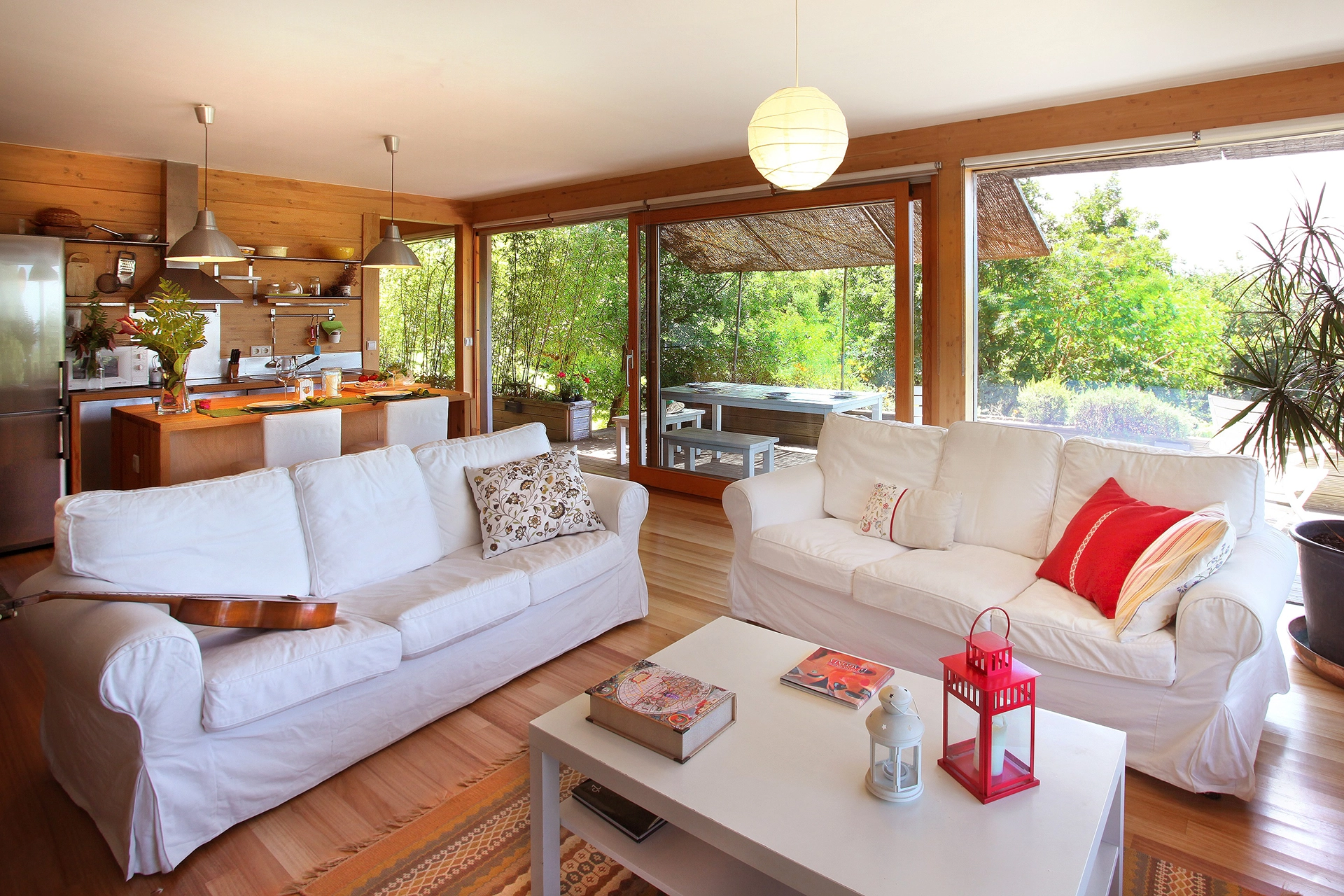
There are houses where we simply live — and there are houses we truly feel. Entering a timber home is often an immediate and almost instinctive experience: the atmosphere feels warmer, the air lighter, and time seems to slow down. This perception is not merely subjective. Increasingly, science confirms what many have long sensed: the space we inhabit directly influences our physical and emotional well-being.

In a world marked by constant stimuli, the search for more balanced environments has become essential. It is within this context that wood takes on a central role — not only as a building material, but as an active element in promoting health and quality of life.

Wood is a natural, organic material with unique properties. Studies in the field of biophilia show that humans have an innate connection to nature. When this connection is integrated into interior spaces, the effects are measurable: reduced stress, improved mood, and an increased sense of comfort.

A study conducted by the University of British Columbia and FPInnovations found that the presence of wood in interior environments can significantly reduce activation of the sympathetic nervous system — responsible for stress responses. Participants exposed to wood-rich environments showed lower heart rates, indicating a more relaxed physiological state.

This effect is often compared to the feeling of walking through a forest. In Japan, this practice is known as Shinrin-yoku, or “forest bathing”, and has been widely studied. Research shows that exposure to natural environments reduces cortisol levels, improves cognitive function, and strengthens the immune system. Wood, as a natural material, brings part of this experience indoors.

But the benefits go beyond the emotional level. Indoor air quality — one of the most critical factors for health — is also influenced by the materials used. Unlike many synthetic materials, wood contributes to a healthier indoor environment. Studies indicate that buildings with a greater presence of wood tend to provide better environmental comfort and higher occupant satisfaction.

Another key aspect is the hygroscopic capacity of wood, meaning its ability to absorb and release moisture naturally. This behavior helps stabilize indoor humidity levels, creating a more balanced environment and reducing respiratory issues and allergies.

Thermal comfort is also worth highlighting. Wood has low thermal conductivity, acting as a natural insulator. This helps maintain more stable indoor temperatures throughout the year, increasing comfort while reducing the need for artificial heating and cooling.

Beyond scientific data, there is a sensory dimension that is difficult to quantify but impossible to ignore. Wood transforms the way we experience space: it improves acoustics, visually warms interiors, and creates an atmosphere that invites us to stay. Natural materials enhance the feeling of refuge and security, both essential for emotional balance.

Indoors, this translates into more human-centered spaces. Environments where simplicity does not mean absence, but rather the presence of what truly matters. The combination of natural light, authentic materials, and an organic language creates spaces that promote calm, comfort, and quality of life.

Living in a timber home is, ultimately, an informed choice. A choice supported not only by trends, but by scientific evidence. A way of aligning architecture, health, and lifestyle.

At a time when well-being has shifted from luxury to necessity, timber homes stand out as a clear and consistent response. Because in the end, it is not just about the space we inhabit, but how that space makes us feel — and how it contributes to our health.

Scientific sources

University of British Columbia & FPInnovations – Wood and Human Health Study
[https://www.fpinnovations.ca]
[https://www.ubc.ca]

Edward O. Wilson – Biophilia (1984)
[https://www.hup.harvard.edu/catalog.php?isbn=9780674074422]

Shinrin-yoku – scientific studies on “forest bathing”
[https://www.ncbi.nlm.nih.gov/pmc/articles/PMC5580555/]

European Forest Institute – Human Health and Well-being in Buildings with Wood
[https://efi.int]

Japanese Ministry of Agriculture, Forestry and Fisheries
[https://www.maff.go.jp/e/]


© 2026 rusticasa®

Related articles

Structural Performance of Wood in Timber Housing

Timber construction has been gaining prominence in Europe, driven by environmental concerns, energy efficiency, and fast building methods. rusticasa® has invested in laboratory technical testing, numerical modelling, and European certification (ETA) to ensure the structural reliability of its building systems.

Read more

Ying Yang Monte da Lua’s new Yoga space

Ying Yang Monte da Lua‘s Country House, integrated in an 8,5 hectare property near Comporta and Grândola, populated by umbrella pines and cork oaks and with an understorey full of...

Read more

Casa do Rio, Enor 2020 Grand Prix of Architecture

On the 27th of October, Ascensores Enor announced the winners of the Enor Architecture Awards 2020. In this VIIIth edition of the Enor Awards, which consecrates every 3 years the best...

Read more