
News

Seismic Performance of a Timber Structure by rusticasa®

1748355212223.webp
Experimental Assessment of the Seismic Performance of a Timber Structure by rusticasa®: Results of Shaking Table Tests

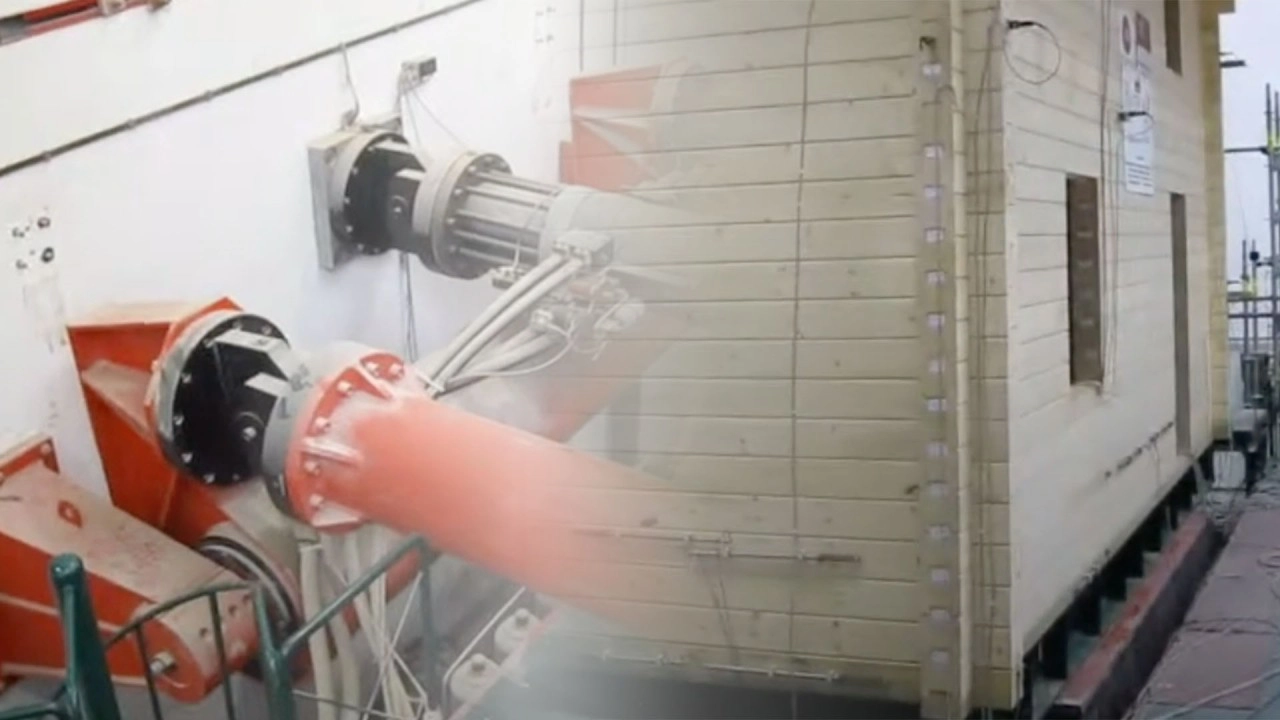
This article presents the results of an experimental campaign aimed at assessing the seismic behaviour of a timber house developed by rusticasa®, within the framework of the European project SERIES – Seismic Engineering Research Infrastructures for European Synergies. The building, constructed using a log house system (Log House System - LHS), was subjected to a series of shaking table tests at the National Laboratory for Civil Engineering (LNEC) in Lisbon, with the aim of analysing its structural performance under seismic actions of varying intensities.

1. Introduction

Timber constructions, particularly log house systems, have historically been valued for their thermal, acoustic and sustainable properties. However, their performance under severe seismic loads raises questions, especially due to the articulated nature of the joints between timber elements. The construction system by rusticasa® includes significant improvements over traditional techniques, notably the use of metal connectors, screws and optimised anchorage systems, aiming to ensure a more robust structural response.

2. Structure Description

The tested house has a rectangular floor plan measuring 5.64 m × 7.30 m and two storeys, with a gable roof. The external walls are made of glued laminated Scots pine timber (strength class C24), with a cross-section of 160 mm × 160 mm. Internal walls have a section of 80 mm × 160 mm.

The floors were constructed with timber beams measuring 90 mm × 165 mm, topped with 22 mm OSB panels to ensure rigid in-plane behaviour. The roof was built using rafters of 70 mm × 190 mm, also sheathed with OSB panels.

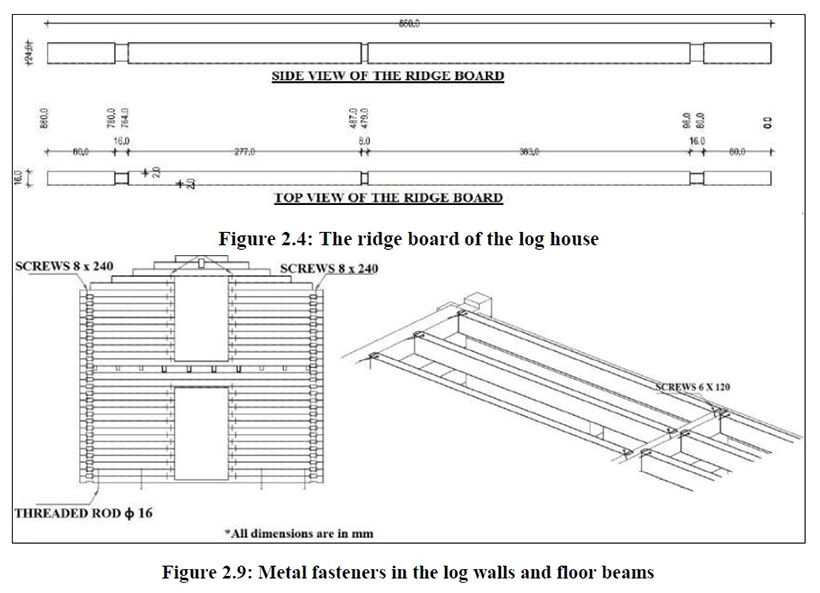
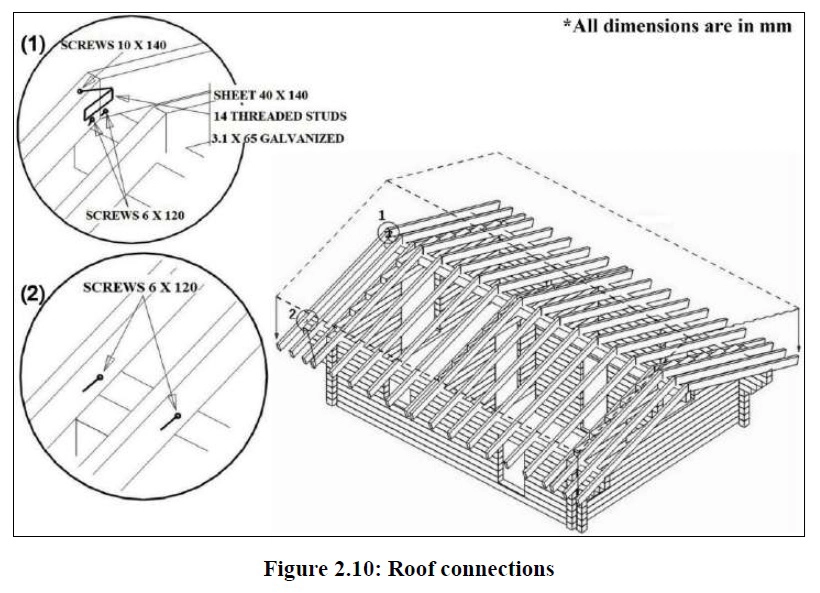
Joints between logs were reinforced with screws of various dimensions (ranging from 6 mm × 120 mm to 10 mm × 140 mm), used to maintain joint integrity during seismic tests. The connection to the foundation was achieved using M16 bolts spaced at 500 mm intervals, fixing the lower logs to a steel frame mounted on the shaking table.


3. Experimental Methodology

The structure was assembled on a steel base allowing the transmission of motion from the shaking table. Additional masses (total weight of about 1,200 kg) were applied, distributed between the upper floor and roof, simulating typical permanent and variable loads in a dwelling.

3.1 Instrumentation

The structure was monitored with 81 sensors, including:

  • 40 uniaxial accelerometers (placed on interior and exterior walls);
  • 22 linear displacement sensors (LVDTs) to measure sliding, uplift and shear deformation;
  • 8 load cells to monitor anchorage forces (hold-down);
  • An optical acquisition system (Hamamatsu K600) for precise inter-storey displacement measurements.


3.2 Test Plan

A total of 12 seismic tests were carried out with increasing accelerations, based on the Montenegro earthquake (1979) record. The maximum acceleration levels (PGA) applied were:

  • 0.07g (low-intensity tests);
  • 0.28g (moderate intensity);
  • 0.50g (high intensity).


Dynamic identification tests were also conducted between the seismic tests to monitor changes in natural frequencies and mode shapes.

4. Results

4.1 Recorded Accelerations

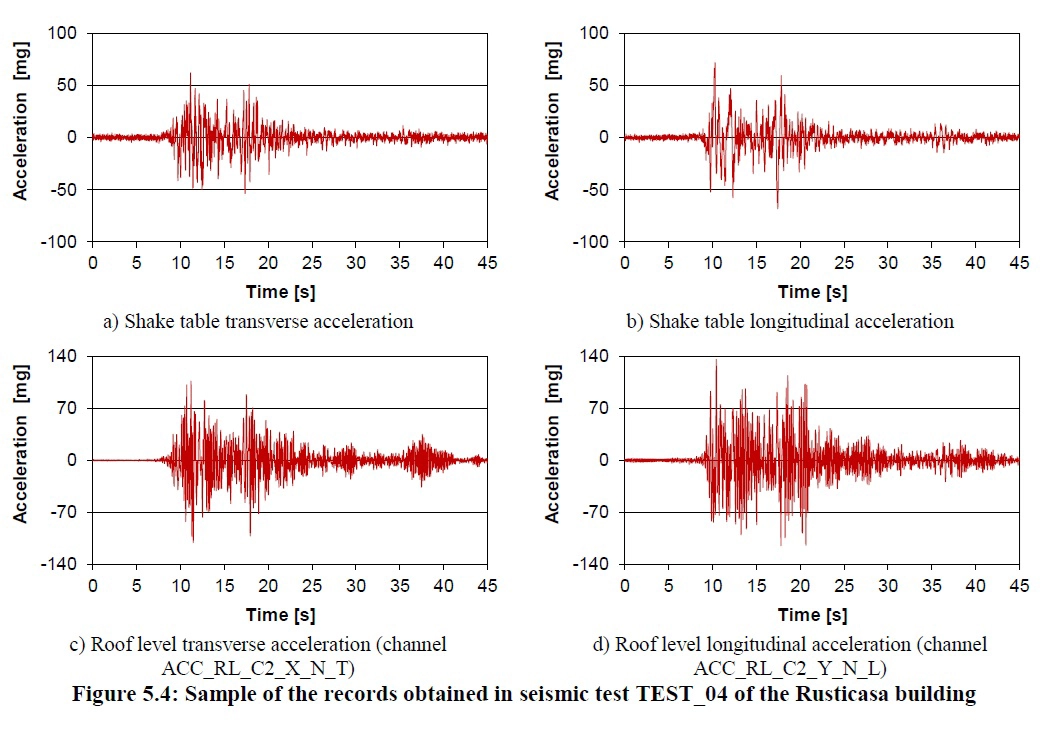
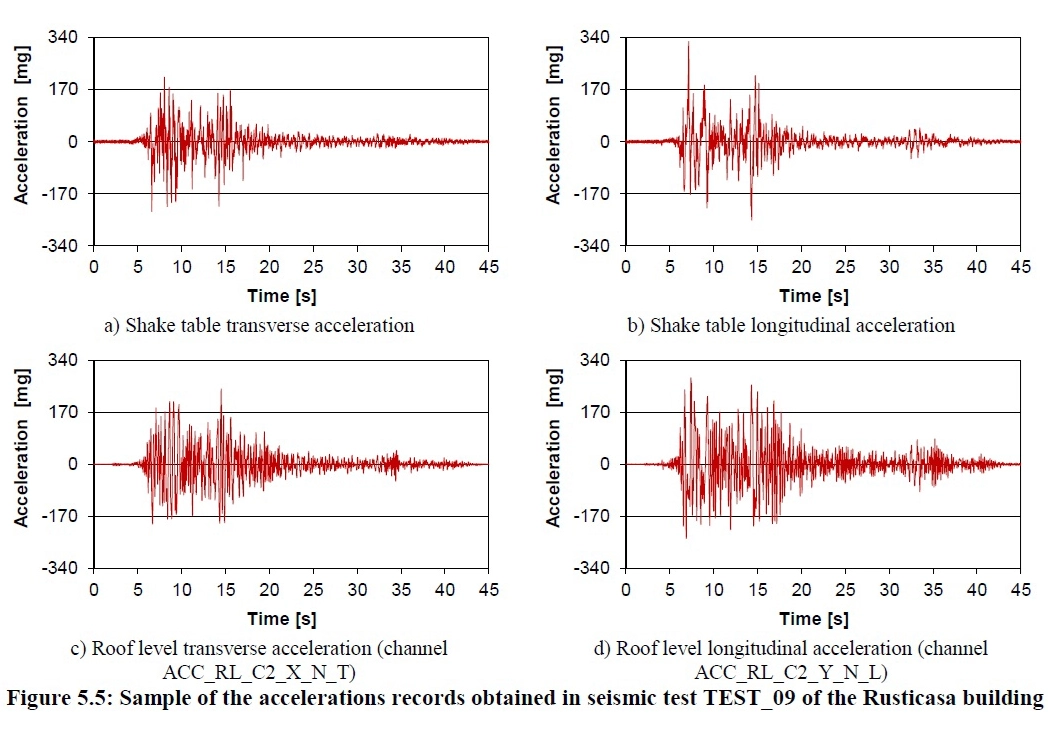
During the most severe test (TEST_11 – PGA 0.50g), peak accelerations of up to 828 mg (0.828g) were recorded at certain locations of the structure, such as at sensor ACC_GLW05X_I_L. Accelerations at roof level were generally higher than at the base, indicating motion amplification.


4.2 Wall Uplift

The maximum wall uplift recorded was 8.88 mm, at internal wall 04X_L, during the 0.5g test. Values below 1 mm were observed during the low-intensity tests, demonstrating the good performance of base connections under reduced load conditions.

4.3 Horizontal Sliding

Maximum recorded horizontal sliding of the walls was also limited, not exceeding 5 mm at the most critical points. Metal connectors and friction between logs contributed significantly to controlling this movement.

4.4 Shear Deformation and Inter-storey Drift

Shear deformation and inter-storey drift remained within acceptable limits. In the 0.5g test, the maximum inter-storey drift recorded was 0.92%, which is below the threshold typically associated with structural risk (1% to 1.5%).

4.5 Anchorage Forces

Tensile forces in the anchorage bolts reached peaks of up to 8.7 kN, as measured by the load cells at the base of the most exposed walls. These results show that the foundation connectors effectively prevented excessive uplift.


4.6 Natural Frequencies

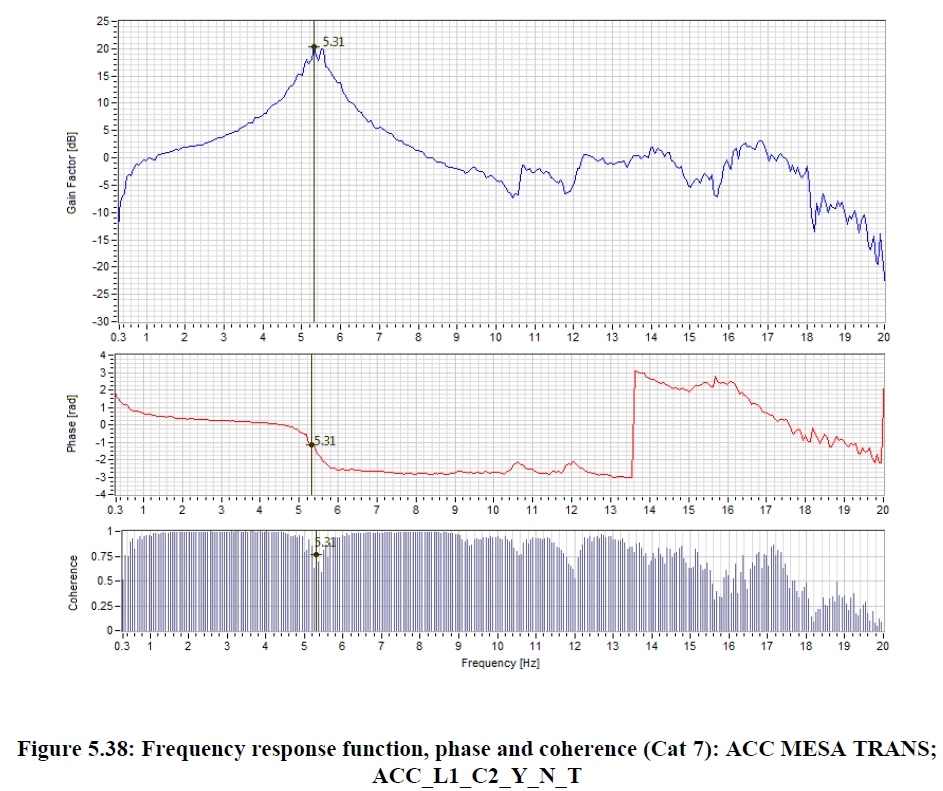
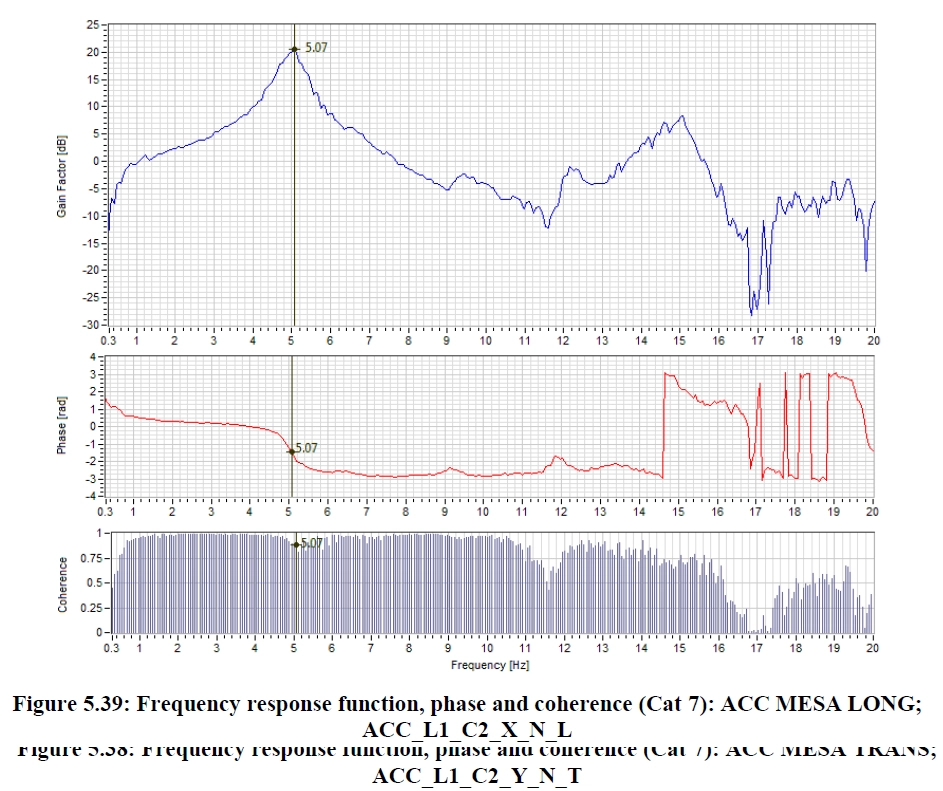
Modal identification of the structure revealed initial natural frequencies around 4.5 Hz for the first mode (longitudinal translation) and 5.2 Hz for the second (transverse translation). After the most severe tests, a slight reduction (~10%) was observed, indicating some residual stiffness loss but no structural collapse.

4.7 Observed Damage

Although the structure exhibited minor cracks, splintering and microfissures near joints and openings (doors and windows), no critical structural damage or collapse was observed. The system remained fully functional after all tests.

5. Conclusions

The tests demonstrated that the timber construction system developed by rusticasa® offers robust seismic performance, even when subjected to loads equivalent to high-intensity earthquakes.

Key conclusions include:

  • The structure proved to be capable of dissipating energy and resisting significant seismic motion without compromising its integrity.
  • The use of strategically positioned metal connectors and screws was critical to limiting uplift and sliding.
  • Dynamic response remained stable, with only modest changes in natural frequencies even after high load levels.
  • Prefabrication and connection precision contributed to efficient assembly and predictable structural behaviour.


These results support the viability of the rusticasa® Log House system in seismic-prone areas, provided good design and execution practices are followed.

References

  • SERIES Project (FP7/2007-2013) – Grant Agreement No. 227887.
  • Final Report: Seismic Performance of Multi-Storey Timber Buildings – rusticasa® Building, LNEC/University of Minho, 2013.


Download report SERIES

Related articles

The most popular houses of 2017 in Homify

In 2017, numerous rusticasa® projects were highlighted by Homify’s editorial teams from around the world. Two projects in particular were selected by readers of the Turkish and...

Read more

Best of Wine Tourism Award 2018

The exclusive Casa do Rio Hotel, built in 2014 by rusticasa® on a project by architect Francisco Vieira de Campos, was awarded the prestigious Best of Wine Tourism Award 2018 in the...

Read more

A recomposed landscape

A recomposed landscape, such is the title given by the magazine Architecture Bois to introduce in its special number 28 the last creation of rusticasa® in Gagny, in the 93 department. The...

Read more